Original photo: TheTruthAbout
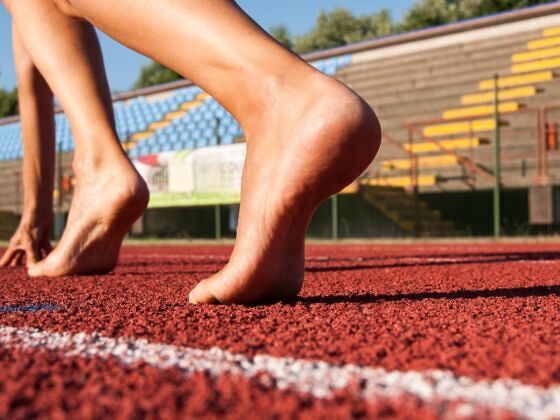
A paper published last week in Nature suggests that runners who go barefoot might be less likely to suffer stress fractures and other common use injuries.
Researchers from Harvard, the University of Glasgow, and Moi University analyzed the gaits of both shod and barefoot runners in the US and Kenya. The study, which was partially funded by minimalist shoe company Vibram, found that most runners who wore sneakers used a “heel-striking” gait that subjected their legs to massive shocks, while barefoot runners naturally adjusted their stride to land on the front of the foot.
“By landing on the middle or front of the foot, barefoot runners have almost no impact collision, much less than most shod runners generate when they heel-strike,” said Harvard evolutionary biology professor and paper co-author Daniel E. Lieberman.
“Most people today think barefoot running is dangerous and hurts, but actually you can run barefoot on the world’s hardest surfaces without the slightest discomfort and pain. All you need is a few calluses to avoid roughing up the skin of the foot.”
Photo: emilydickensonridesabmx
US runners stick to shoes
While many people in Kenya and other countries learn to run without shoes, barefooters have traditionally been a fringe group among US runners.
The practice started to get more attention in 2009, after the publication of Born to Run by Christopher McDougall. The book describes Mexico’s Tarahumara Indians, who run long distances at great speeds while wearing only thin sandals.
Born to Run also profiled “Barefoot” Ted McDonald, a marathoner and running coach who is one of barefoot running’s most famous advocates. In an interview with Runner’s World, Barefoot Ted said that he had received “thousands” of emails from readers since the book came out.
“Readers are so happy to hear that they’re not just broken by default,” he said. “Many people have been convinced, either by the media or somebody in the medical field, that they were not designed to run. They thought of their feet as injury-prone appendages that needed extra padding, protection and support in order to run.”
Even with science on its side, barefoot running isn’t likely to become the norm in the US anytime soon. In an ESPN poll conducted last year, only 34% of respondents said that they would consider running barefoot.
Geography also complicates things. In my home city of Chicago, running barefoot is out of the question during the winter, at least if you plan on keeping your toes.
Photo: vanRijn
Going barefoot
If you do choose to lose the shoes, it’s important to do it gradually. Because barefoot running uses a different set of muscles than shod running, runners who aren’t careful about making the switch risk damaging their Achilles tendons.
Dr. Lieberman recommends starting with short runs and increasing distance by no more than 10% a week.
Minimalist shoes can also provide some protection from scrapes and cuts without affecting your stride. Barefoot Ted’s site offers custom-made leather and rubber running sandals inspired by Tarahumara shoes. Vibram’s glove-like Five Fingers shoes are another popular option.
About the Author
Related Posts
16 Comments... join the discussion!
-
-
Do you think it’s ok if I tried this on the treadmill at the gym?
↵ -
Treadmill works, but just like with starting any new training, give your legs (and feet) time to adjust, particularly if you’re going with naked feet.
↵ -
Born to Run is what got me started:
http://onceatraveler.com/barefoot-running-progress
I would definitely go naked all the time if I had access to grassy fields or rock-free trails, but now, I stick with the Five Fingers Sprint, and walk in the KSO Treks. As far as training is concerned, I started VERY slowly when I made the switch to barefoot running, only going a few miles a week until my legs felt good and ready. Barefoot running style is better for you, no doubt about that, but the reason many people still stick with shoes is it’s very difficult to make the transition.
↵ -
This is great news; I hate having shoes on. One of my next goals is to (finally) learn how to run. Maybe I’ll start learning barefoot.
↵ -
I started using the Vibram Five Fingers after I read about them from Tim Ferris’s blog and love them.
Candice I think it would be totally safe if you’re in the gym but the advice from the article is sound to do so gradually. You wouldn’t want to get blisters or hurt if you run 5 miles shoeless without building up gradually. Let us know if you try it. I’d love to hear what you think!
↵ -
Call me what you will but I love going shoeless too! driving, hiking strolling…maybe not downtown Seattle but anywhere I can shed my soles without catch hep C!
great post adam!↵ -
I heard this guy on NPR and shed my shoes on the treadmill. I don’t think most folks would like to see a barefoot runner at the gym, but we have a treadmill at home — hey, don’t judge me! it came from craig’s list and beats driving to the gym! — and I’m lots happier barefoot. I’m not a runner by nature, and going shoeless actually helped.
↵ -
The great debate! I ran in my FiveFingers one day after my knee had been particularly bothering me and it felt fine… maybe they’re on to something.
And Born To Run is an AMAZING book!↵ -
Great post! Well, I’ve been hanging out in Kenya for the past 4 years and I always see lots of “new blood” (future marathoners) running everywhere. I’m sure the economic situation for some runners in the rural areas makes barefoot running a necessity. Perhaps this is a blessing in disguise?
It also helps that the average elevation above sea level is around 7,000 metres so these runners have a better endurance capacity. I’m gonna try this technique out when I start running.
Cheers!
↵ -
Hm, I wonder if people who go barefoot in their home are more comfortable running barefoot?
↵ -
This article is all about plugging Barefoot Ted, shall I say it again Barefoot Ted…give me a break! and get real!
↵


